A smile makeover is the kind of phrase that makes the work sound like shopping — pick the features you want and have them fitted. The reality is closer to design. A smile has to sit on a particular face, work for a particular bite, and rest on teeth and gums that are sound underneath. Get any of those wrong and the result looks off, or does not last. So before any treatment begins, the question we are answering is not “what would you like done” but “what does this smile actually need, and what will look like it belongs here”.
What makes a smile read as natural
When people describe a smile they admire, they rarely talk about individual teeth. They notice when something looks engineered — teeth that are too uniform, too bright, too square, set a fraction too forward. A natural-looking smile is one where the teeth are well shaped, properly aligned, in proportion to one another, and a shade of white that suits the face rather than glowing against it.
That last point matters more than people expect. The right colour is the one that fits the complexion and the eyes; a shade that would look right on someone else can look artificial on you. Designing a smile means choosing for the face in front of us, not for a chart.
The three pillars we plan around
Every plan we draw up has to hold three things in balance at the same time. We think of them as biology, function, and aesthetics, and we will not trade one away to flatter another.
Biology comes first. Before anything aesthetic, we look at the foundation — the gums, the teeth, the bone and support structures beneath. If we find gum disease, untreated decay, or a grinding habit that is quietly wearing the teeth down, that is treated before a makeover begins. New work placed over an unhealthy base is work that will fail.
Function comes next. Teeth exist to meet, chew, and speak, and a beautiful smile that throws the bite out of balance is not a success. We check how the teeth come together and plan so that the finished result works as comfortably as it looks.
Aesthetics is the part you see, and it is the last of the three rather than the first — because it depends on the other two being right. Shape, length, colour, and the line of the gum are all weighed against your facial structure, so the smile looks like it grew there.
How the planning actually goes
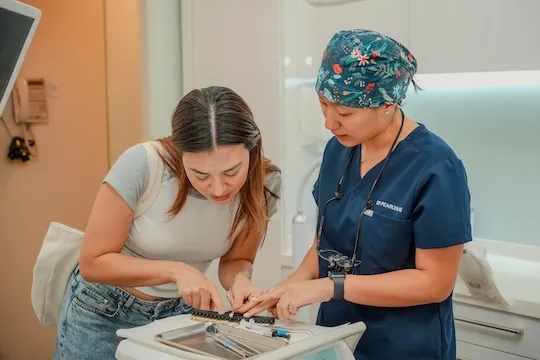
The first appointment is an examination, not a sales meeting. We look at gum health, the bite, the underlying support, and we listen to what it is you would like to change. Only once we know the mouth is healthy enough do we begin to design.
From there we build a plan that may combine several treatments. We take your facial structure and colouring into account, then share the plan with you in plain terms, step by step, so you understand what each stage does and why it is in the sequence.
A smile makeover is designed, not assembled — built for one face, one bite, one set of teeth.
Where it helps, we will show you a mock-up before any permanent work begins — sometimes a physical version you can try in the mouth, sometimes a digital one — so you can see the direction of travel and ask for adjustments while everything is still easy to change. That is the right moment for questions, and we would rather have them then than at the end.
The treatments a plan might draw on
Depending on what your smile needs, a plan might include professional whitening to lift discolouration that brushing no longer shifts; reshaping or gum recontouring where teeth look short or the gum line sits unevenly; dental implants to replace a missing tooth and preserve the bone beneath it; or clear aligners such as Invisalign to move crooked teeth into a better position — which often means less reshaping is needed later. None of these is a default. Each earns its place only if the diagnosis calls for it.
If this resonates
If you are considering a smile makeover, the honest starting point is an assessment of your teeth, your bite, and your face — not a brochure of options. Our SmileUp Veneers programme begins exactly there. Arrange a consultation and we will give you a considered, plain assessment of what your smile would benefit from.