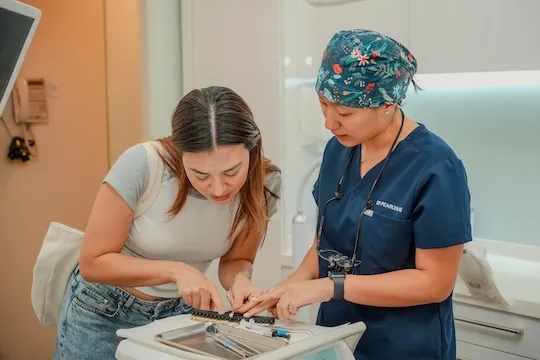
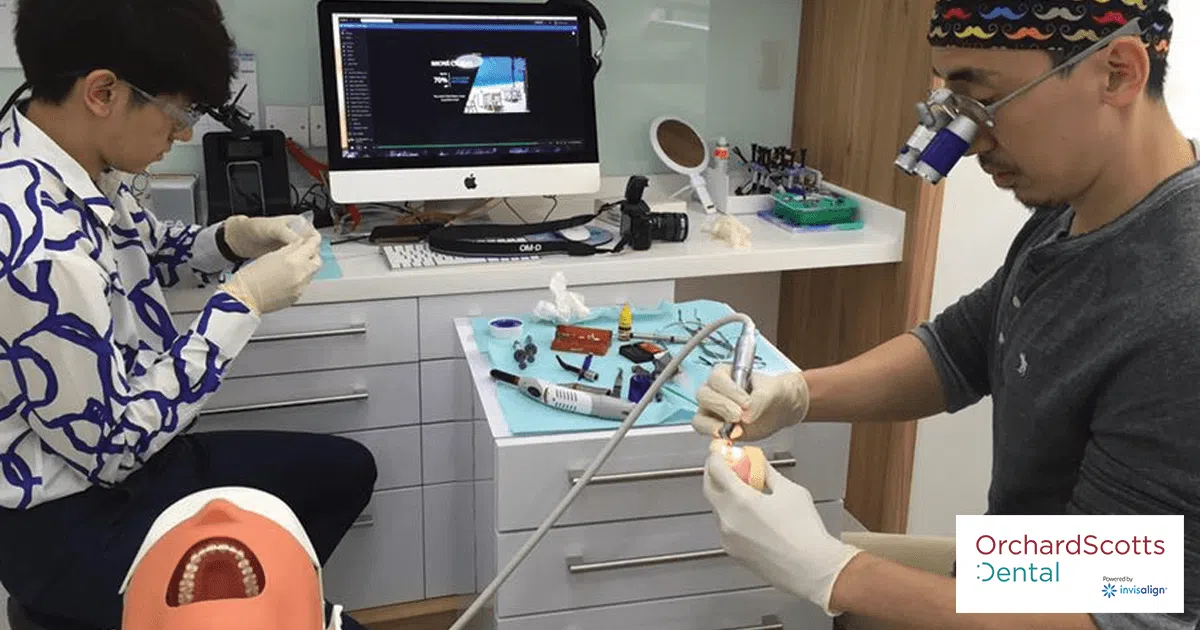
It is easy to be impressed by the equipment in a modern surgery — the scanners, the lasers, the screens rendering a tooth in three dimensions before anyone has touched it. But the technology is not the point, and a clinic that treats it as the point tends to produce work that looks the part and ages badly. The point is what good tools let a clinician do: see more clearly, plan more carefully, and remove less of your natural tooth than the older methods required. Read in that light, the advances of the last two decades are not gadgetry. They are, almost all of them, in service of biology and function.
What follows is a look at a few of the tools we rely on, and the reason each one earns its place.
Materials that behave like the tooth they replace
For most of dentistry’s history, a replacement tooth was a compromise. Early dentures were carved from wood or, for those who could afford it, ivory — uncomfortable, ill-fitting, often close to useless for eating. The materials announced themselves.
Modern ceramics are a different proposition. High-grade ceramic handles light much the way enamel does, which is why a well-made restoration reads as a tooth rather than a fixture. It is also durable and kind to the soft tissue around it, so the gum is not in a quiet argument with the material for years afterward. For dental implants, the same logic applies below the surface: the materials are chosen so the body accepts them and the bone holds. The aesthetic result is the visible part; the tissue tolerance and the fit are what make it last.
The polymers used in the Invisalign system are a quieter example of the same thinking. The plastic has to hold enough tension to move a tooth and enough give to be worn comfortably, and it has to fit precisely enough to do both. None of that is about looking impressive. It is about a tray that does its job without you having to think about it.
Scanning, in place of the plaster impression
A great deal of dentistry depends on an accurate map of the mouth. For decades that map was a plaster impression — the tray, the bite, the wait while the cast was sent away and a model returned, sometimes days or weeks later, occasionally flawed enough to start again.
Intra-oral scanners replace the tray with a wand and a few minutes. The mouth is captured digitally and turned almost at once into a three-dimensional model the clinician can plan from, and that a laboratory can work from without the back-and-forth. The gain is not only convenience, though it is more comfortable, particularly for younger patients who never took well to the impression material. The real gain is precision. A more accurate starting point means a restoration that fits the first time, and a fit that fits is a fit that protects the tooth underneath.
Lasers, where precision is the whole point
Lasers have a science-fiction reputation that does the actual work a disservice. In a dental setting a laser is simply a finely controlled beam of energy, and its usefulness comes from how precisely it can be aimed.
The clearest example is gum recontouring. Where the gum line sits low or uneven and draws the eye away from the teeth, a laser can reshape it with a fine, controlled edge and little recovery time. The accuracy matters because the tissue you are not removing matters as much as the tissue you are — this is delicate work near the bone, and a precise instrument is a conservative one. The same beam has a role in some whitening regimes, where light is used to activate the gel that lifts staining from the enamel.
The best tools are the ones that let us take away less — of the tooth, of the gum, of the margin for error.
The thread that runs through all of it
Look across these advances and the pattern is consistent. Better materials behave like the tissue they sit against. Better scanning gives a more accurate plan. A finer instrument removes less. None of it is technology for its own sake; each one lets us treat more conservatively and predict the result more reliably. Today’s equipment will itself look dated in a generation — that is the nature of the thing — but the principle behind choosing it will not change.
If you would like to understand how any of this would apply to your own teeth, our SmileUp Veneers programme begins with a proper assessment rather than a default recommendation. Arrange a consultation and we will give you a considered, honest read of what your smile actually needs.