
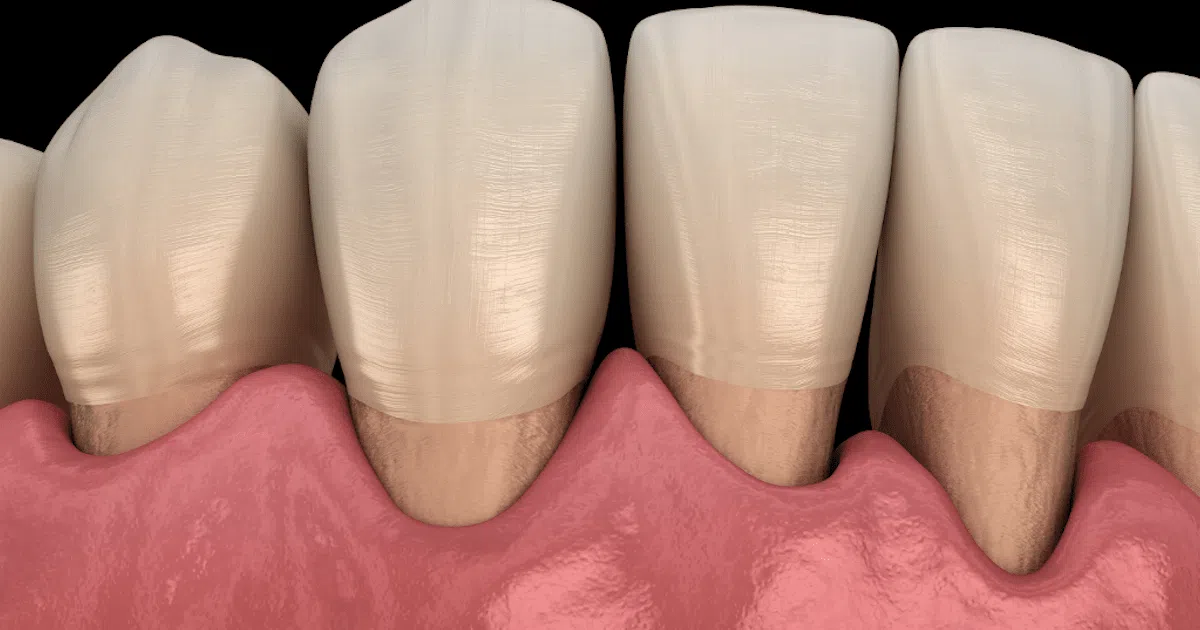
Gum recession tends to be noticed late. The gums draw back from the teeth slowly, a fraction at a time, and by the point a tooth starts to look longer or feel sensitive to cold, the process has usually been underway for a while. That is the quiet difficulty with receding gums — not that they are hard to treat, but that they are easy to miss until the cause has had time to settle in. Understanding what drives them is the first step toward addressing them while the options are still simple.
What recession is, and why it matters
Recession is the gum tissue pulling away from the tooth, exposing more of the crown and, eventually, the root. Unlike the enamel that protects the rest of the tooth, the root has no such covering, which is why exposed roots feel sensitive and are more vulnerable to decay. Left unaddressed, recession widens the gaps where it has taken hold and, in time, can loosen the support a tooth depends on. The earlier it is caught, the less of this follows — which is the whole argument for paying attention to it sooner rather than later.
What causes it
Recession is usually the visible end of something happening beneath it, and the cause shapes the treatment, so it is worth naming the common ones.
Brushing too hard is among the most frequent. A firm brush and a vigorous hand wear at the gum margin over years, and the tissue retreats from the pressure — a case where good intentions do the damage. Gum disease is another: when plaque and bacteria inflame the tissue and erode the bone beneath, the gum line recedes as the support gives way. Grinding and clenching load the teeth in ways the gums were not built to absorb, and the strain shows at the margin. And for some people the tendency is simply inherited — thinner gum tissue, or a bite that places teeth where the gum has less to hold on to.
These causes are different in kind — one mechanical, one infective, one a matter of force, one of biology — and they can produce a similar-looking gum line by entirely different routes. Which is why a careful diagnosis comes before any recommendation.
The treatment options
Treating recession well means treating its cause rather than only its appearance.
Where the driver is technique, the answer is often the least invasive one: a softer brush, a gentler method, and the habit corrected before more tissue is lost. It is unglamorous, and for early recession it is frequently enough.
Where gum disease is the cause, the priority is the disease itself. A thorough professional cleaning and gum care clears the bacteria from below the gum line and lets inflamed tissue settle, which halts the recession at its source. Addressing the infection is what makes anything that follows durable rather than temporary.
Where recession is more advanced — exposed roots, lost support, gaps that will not resolve on their own — a graft may be the right step, repositioning tissue to cover the exposed surface and protect the tooth. Where a case calls for that, we would say so plainly and arrange the appropriate referral, rather than reaching for it by default.
The way we approach it
Receding gums sit at the meeting point of biology, function and aesthetics — the health of the tissue, the stability of the teeth it supports, and how the gum line finally looks. We begin by identifying what is actually driving the recession in your case, because the treatment that holds is the one matched to the cause. Often that is a single, conservative change; sometimes it is more.
If your gums have started to recede, or you have noticed sensitivity or teeth that look longer than they did, the place to begin is a proper look. Arrange a consultation and we will tell you what we see, what is causing it, and what we would — and would not — recommend.