
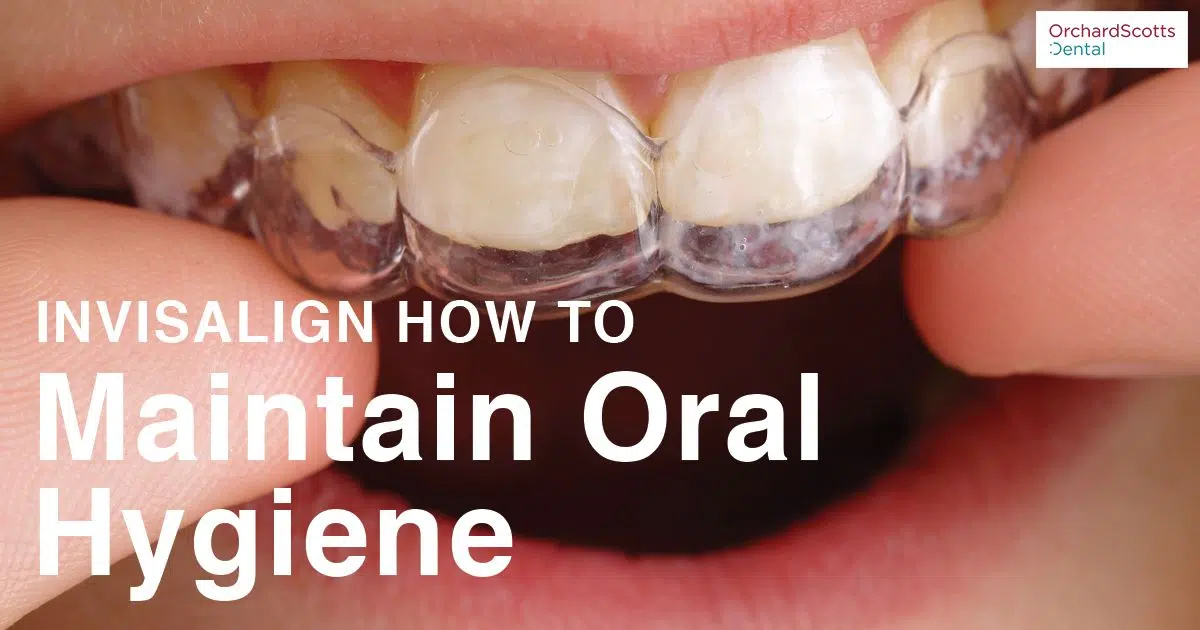
One of the quieter advantages of clear aligners is that they make good oral hygiene easier rather than harder. Because the trays come out, you brush and floss the teeth you already have, with no wires to work around — a contrast with fixed braces, where cleaning thoroughly takes real effort. The trade-off is a small discipline: those trays sit snugly against your teeth for most of the day, so whatever is on the teeth when they go back in stays there. Keeping things clean is less about doing more and more about doing it at the right moments. This guide covers both halves — caring for your teeth, and caring for the trays.
Looking after your teeth
The routine through treatment is the familiar one, applied a little more consistently. Brush twice a day for a full two minutes, holding the brush at roughly forty-five degrees to the gum line so the bristles clean where the tooth meets the gum. Floss daily — ideally after meals, since anything left between the teeth is about to spend hours sealed under an aligner. Don’t neglect the tongue, and replace a worn toothbrush every few months.
The reason this matters more with aligners than without comes down to saliva. Normally, saliva washes food particles and acids away through the day — which is why an occasional missed brushing is no great event. An aligner interrupts that natural rinse, holding whatever is on the teeth in close contact for long stretches. Reinsert a tray over unbrushed teeth and you trap food and acid against the enamel for hours at a time, which over a course of treatment raises the risk of decay and gum irritation. That is the whole case for brushing before the trays go back in.
When you cannot brush
Real life does not always allow a full clean after every meal — you are at work, travelling, out for the evening. On those occasions, rinse your mouth thoroughly with water before the trays go back in, and chew sugar-free gum to encourage saliva. Drinking water with and after meals helps flush particles away. None of this replaces brushing, but it is a reasonable bridge until you can. Carrying a small toothbrush makes the ideal version possible far more often than you might expect.
Cleaning your aligners
The trays need their own attention, and a few specifics make the difference between clear plastic and cloudy.
Start with clean hands, so you are not introducing anything onto the trays. Rinse and gently clean them at least twice a day — when you brush in the morning and at night is a sensible rhythm — and certainly before reinserting them after eating. Use a soft-bristled brush, a cotton swab, or a soft cloth; a hard brush scratches the plastic, and scratches both cloud the trays and give bacteria somewhere to settle.
A few materials to keep away from them: avoid regular toothpaste, which is mildly abrasive and dulls the surface over time, giving the trays a murky, yellowed look. Rinse only in lukewarm water — hot water can warp the thermoplastic and ruin the fit, and very cold water is best avoided too. Mild soap or a cleaning product made for aligners works well for a routine clean; for a deeper one, soak the trays periodically in a solution your dentist recommends, then rinse before wearing them again.
Almost everything that goes wrong with an aligner’s appearance comes down to three things — abrasive toothpaste, water that is too hot, or simply not cleaning it often enough.
Storing and inspecting your trays
When the aligners are out of your mouth, they belong in their protective case, not loose on a table or wrapped in a napkin — the case shields them from bacteria and, just as importantly, stops them being thrown away by accident, which happens more often than you would think. Every so often, look the trays over for deep scratches, a white film, or a build-up of tartar. Most of this eases with a longer soak; if anything looks unusual or the fit changes, mention it to your dentist rather than persisting with it.
What to keep out of the trays
Two everyday habits work against clean aligners. The first is frequent snacking and sipping, which means removing and reinserting the trays all day — more handling, more chances to trap food, and more acid exposure on the enamel between cleans. Settling into set meals serves both your teeth and the trays. The second is coffee, tea and other staining drinks taken with the trays in: they discolour the plastic and dull its near-invisible finish. Keep them for when the aligners are out, and clean your teeth before the trays return.
Why the dentist visits still matter
Wearing aligners does not replace ordinary dental care — if anything it makes it more useful. Alongside the orthodontic reviews of your progress, keep up with a dentist in the same practice for routine check-ups and professional cleaning. A professional clean reaches what a home routine cannot, and a regular eye on your gums and enamel catches anything early, while it is still small.
If this resonates
If you are considering clear aligners, or partway through treatment and want to be sure you are caring for them well, we are glad to help. Arrange a consultation and we will walk you through what good hygiene looks like for your particular case.