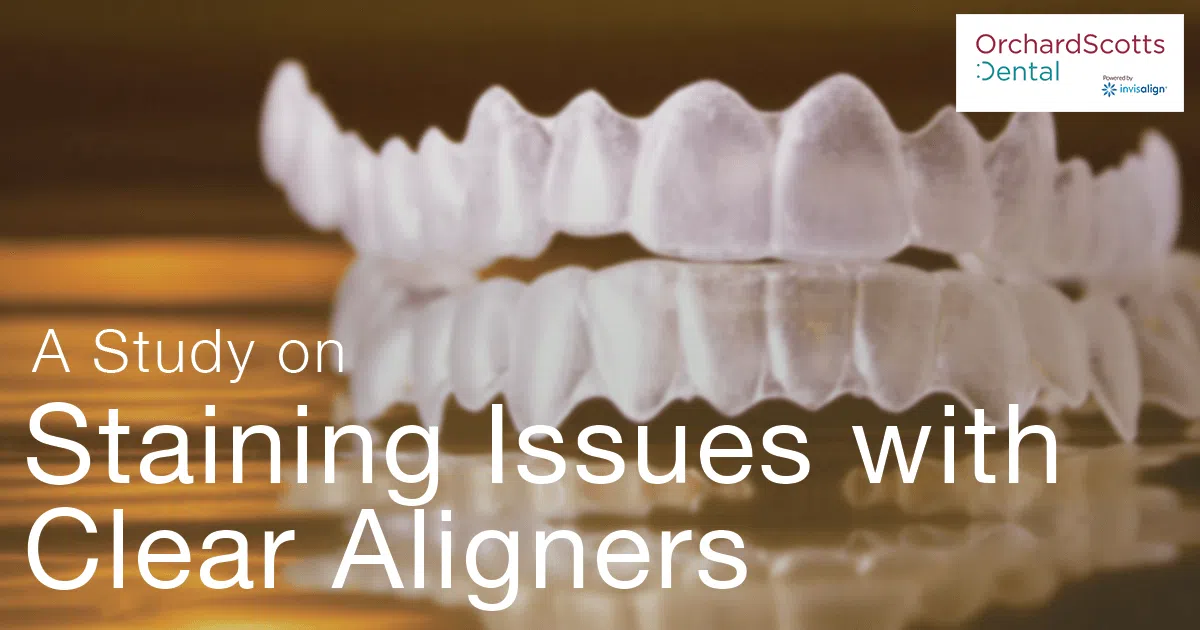
Part of the appeal of clear aligners is precisely that they are clear. So it is worth knowing that they are not immune to staining — the same drinks that discolour teeth can, over time, discolour the trays. A laboratory study set out to measure exactly how much, and the findings are less a warning than a useful guide to keeping your aligners looking the way they are meant to.
What the study tested
The research team compared three clear aligner systems — Angelalign, Smartee, and Invisalign — by immersing trays from each in red wine, black coffee, and black tea, all known to stain enamel. A tray from each system was kept in distilled water as a control. The aligners were soaked first for twelve hours, then for seven days, and the colour and surface of each were measured using a standardised colour scale, infrared spectroscopy, and scanning electron microscopy.
What it found
After twelve hours, every aligner had taken on a slight colour change, with coffee producing the most pronounced staining across the board. After seven days, the staining deepened and the trays showed small changes to their surface and chemistry from the prolonged exposure. The aligners held up notably well against black tea and red wine; coffee was the consistent culprit.
The honest reading is straightforward. These are laboratory conditions — a tray sitting in a glass of coffee for hours on end — not how anyone actually wears them. But the direction is clear enough: subject aligners to repeated sips of coffee, dark tea, or red wine while they are in, and staining will follow.
What it means in practice
The finding lines up neatly with the guidance that already comes with aligner treatment. The trays are designed to be removed for eating and for drinking anything other than water. Followed properly, that single habit keeps coffee, tea, and wine away from the trays entirely — and staining stops being a question.
A short routine covers it: take the aligners out before you eat or drink, brush your teeth before putting them back in, and rinse and clean the trays themselves so nothing has a chance to settle. The same care that keeps the trays clear also keeps your teeth healthy through treatment, and tends to leave you with better habits afterwards.
The way we think about it
No appliance is faultless, and a clear-eyed view of its limits is more useful than a list of virtues. Invisalign is a well-researched system, refined over decades, and it suits a wide range of cases — but it works best in the hands of someone who understands how to wear and care for it. That is the part a good consultation is for: not selling you the appliance, but making sure it is the right tool for your case and that you know how to get the most from it.
If this resonates
If you are considering clear aligners and want to understand whether they suit your teeth — and how to keep them at their best through treatment — the place to start is an assessment. Arrange a consultation and we will talk you through what your case needs, plainly.