This guide walks through the conditions that Invisalign can correct, and the cases where it is less suitable.
Teeth misalignment issues
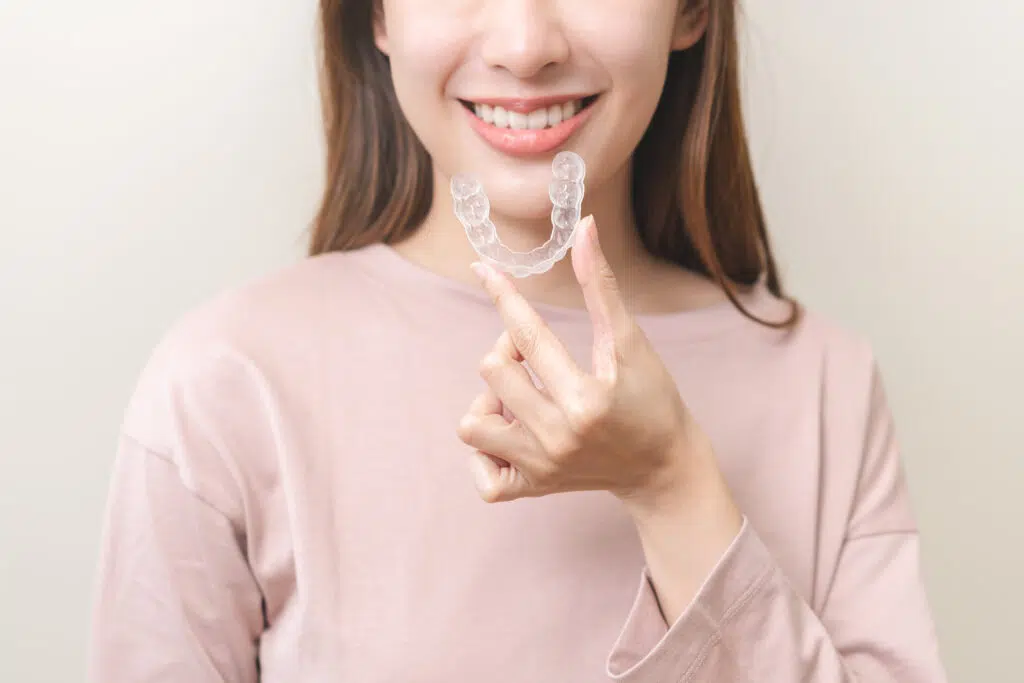
Invisalign is a clear aligner that gently moves teeth into better positions. It can address the following common misalignment conditions.
Overbite
An overbite, or “deep bite”, occurs when the upper front teeth overlap well over the lower front teeth. A slight overbite is normal, but a pronounced one can contribute to enamel wear, jaw discomfort, and difficulty biting or chewing. Invisalign can help reduce an excessive overbite by applying gradual pressure to reposition the teeth.
Underbite
An underbite is seen when the lower teeth sit farther forward than the upper front teeth. This can result from an oversized lower jaw, an underdeveloped upper jaw, or both. Left unaddressed, it can lead to chewing problems, speech difficulty, and premature wear. Invisalign is effective for many underbite cases, improving both bite function and appearance.
Open bite
An open bite appears when the upper and lower front teeth do not meet when the mouth is closed, leaving a gap. This can affect both the smile and the ability to bite into food. Invisalign can treat many open-bite cases by applying precise pressure to bring the teeth together.
Crowding
Crowding develops when the jaw has insufficient space for all the teeth to sit properly, leading to overlapping or crooked teeth. Crowded teeth are harder to clean, which raises the risk of plaque build-up and gum inflammation. Invisalign can create space and align crowded teeth, leading to a healthier and more even result.
Functional issues
Beyond improving alignment, Invisalign can help with bite function. Jaw misalignment — where the upper and lower jaws do not meet properly — can cause uneven wear, muscle strain, and sometimes temporomandibular joint (TMJ) discomfort.
Invisalign can help improve mild to moderate cases by guiding teeth into positions that support better jaw alignment. More severe cases may need additional treatment.
Dental issues Invisalign cannot address
Invisalign is effective for many situations, but some are better served by braces or other orthodontic treatment.
Severe jaw misalignment
For significant skeletal discrepancies, clear aligners may not provide the necessary correction. Major jaw-position adjustments often call for fixed appliances, or in some cases surgical intervention.
Extreme tooth rotation
If a tooth is severely rotated — typically beyond about 20 degrees — it can be difficult for aligners to correct effectively. Clear aligners work best for mild to moderate rotations.
Large gaps between teeth
Invisalign can close small to moderate gaps, but very large gaps may be harder to correct with aligners alone. Braces are sometimes recommended in these cases, particularly where the gap is substantial.
Teeth needing vertical adjustment
Cases requiring significant vertical movement — for short teeth or uneven gum lines, for example — may not suit clear aligners, as braces can apply a stronger, more controlled force in these situations.
How cost is approached
What Invisalign costs depends on the complexity of the case, the number of aligners required, and the length of treatment. Rather than quote a figure against a generic plan, we prefer to discuss cost at your consultation, once we understand what your teeth actually need.
How we think about it
Invisalign is a versatile solution for many common alignment issues — but the honest version of the conversation is not “aligners are always the answer”, it is “here is what your particular case needs, and whether aligners deliver it”. A proper assessment is what tells the two apart.
At Orchard Scotts Dental, we will look at your bite, your teeth, and your goals before recommending anything. Arrange a consultation and we will tell you, plainly, whether Invisalign is the right tool for the result you are after.