This article looks at the speech changes some people notice when they first start Invisalign, and offers practical ways to adapt more quickly.
The impact of Invisalign on speech
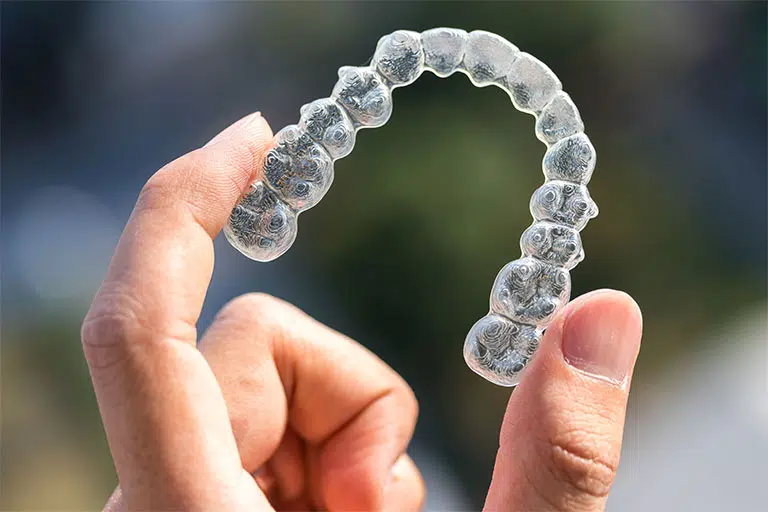
When you first start using Invisalign, it is natural to notice slight changes in your speech. The aligners fit closely over your teeth, and their presence can feel unusual while you are getting used to wearing them full-time.
The most common change is a slight lisp, particularly on sounds like “s” and “z”. This happens because the aligners create a small barrier between your tongue and the roof of your mouth, which can make certain sounds harder to form at first.
Most people find their speech returns to normal within a few days or weeks as they become accustomed to the aligners.
Factors affecting speech clarity
How much Invisalign affects your speech depends on several factors.
Severity of misalignment
The degree of misalignment can influence the effect. If your teeth are significantly misaligned, the aligners may initially feel more prominent, which can make adjusting take a little longer.
People with minor misalignments often find it easier to speak clearly, as the aligners are less likely to interfere with their natural speech patterns. As the teeth gradually move into alignment, any initial difficulty tends to ease.
Duration of treatment
The length of treatment varies — some people wear aligners for only a few months, others for over a year. The longer you wear them, the more time your mouth has to adjust. Most people adapt within a few weeks, though those in longer treatment may notice small fluctuations as the teeth move and the aligners change.
Individual differences in speech patterns
Everyone’s speech is unique, and this influences how quickly you adapt. Some people are naturally more sensitive to changes in the mouth than others. If you already have a lisp or another speech pattern, you may notice a more pronounced effect at first — but most people find that any initial difficulty improves over time.
Adherence to the treatment plan
Wearing your aligners as instructed matters for both your dental result and your speech adjustment. Invisalign aligners should be worn 20 to 22 hours a day, removed only for eating, drinking, brushing, and flossing. The more consistently you wear them, the faster your mouth adapts.
Tips for improving speech clarity with Invisalign
If you are concerned about how the aligners will affect your speech, a few simple steps can help you adapt more quickly:
- Practise speaking: Reading aloud, holding conversations, or recording yourself helps your mouth adjust to the aligners.
- Focus on problem sounds: If “s” or “z” are particularly tricky, practise words and phrases that use them.
- Stay hydrated: Aligners can dry the mouth, which can make speech harder. Drinking enough water through the day helps.
- Stay consistent with wear: The more you wear your aligners, the faster your speech normalises. Avoid leaving them out for long stretches.
- Speak to your dentist: If significant speech difficulty persists after a few weeks, mention it. Your dentist can check that the aligners are fitting correctly and offer further guidance.
Invisalign at Orchard Scotts Dental
Invisalign may temporarily change your speech, but for most people that settles quickly with a little time and practice.
Orchard Scotts Dental provides Invisalign treatment, and our dentists aim to make the experience as smooth and comfortable as possible, from the first assessment onwards — with advice tailored to your particular case.
If you are weighing up clear aligners, arrange a consultation and we will tell you, plainly, whether they suit what your teeth need.