An implant is often described as the closest thing dentistry has to a permanent tooth, and in the right conditions that is fair. But the word permanent can mislead. An implant does not look after itself any more than a natural tooth does. What decides whether it lasts a decade or a lifetime is rarely the surgery — it is the ordinary care that follows, in the weeks while the bone fuses and in the years after that. None of it is demanding. It is simply worth understanding.
The early weeks set the course
The most important window is the one that feels least eventful: the healing period after placement, while the implant integrates with the bone. This is the process — osseointegration — that turns a fixture into a foundation, and it cannot be rushed. The instructions your dentist gives during this time are not arbitrary caution. A soft diet keeps load off the site while it settles. Finishing any prescribed course reduces the risk of infection taking hold before the gum has closed. Resting rather than testing the new tooth is what lets it become stable in the first place.
It is easy to feel recovered before you are healed. The two are not the same, and the gap between them is where most avoidable problems begin.
What protects an implant
Once the implant has settled, caring for it is close to caring for a natural tooth — with one or two refinements.
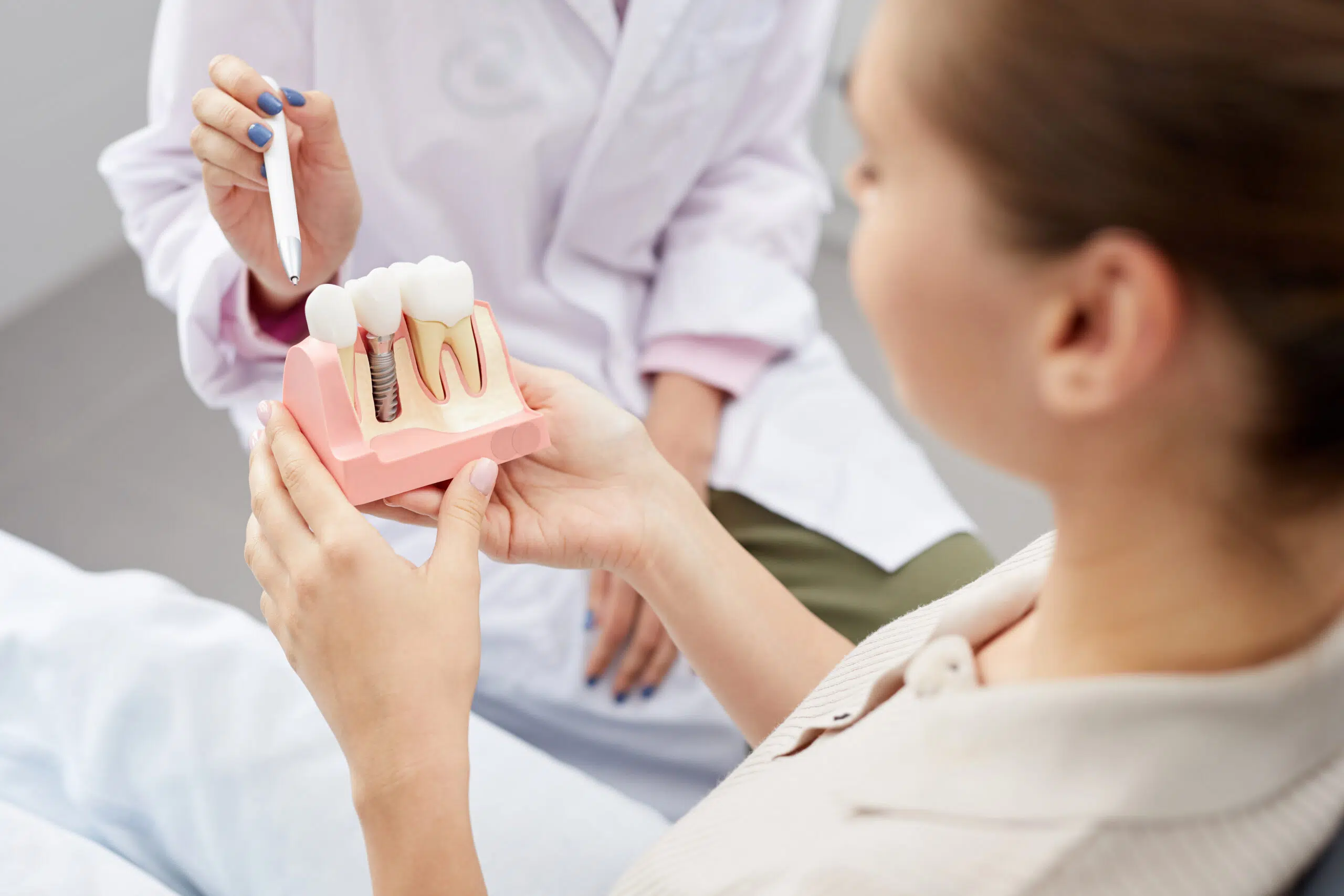
Cleaning is the foundation. An implant cannot decay, but the gum and bone around it can become inflamed, a condition called peri-implantitis that behaves much like gum disease and is the main reason implants fail late. Brushing twice a day with a soft-bristled brush keeps plaque off the crown and the gum margin where it gathers. Cleaning between the teeth matters just as much, using implant-friendly floss or a water flosser to reach the spaces a brush misses. The aim is not vigour but consistency.
Regular check-ups close the loop. At these visits the implant, the gum, and the bite are reviewed, and any early sign of trouble is caught while it is still small and easy to address. Professional cleaning also reaches deposits that ordinary brushing leaves behind. Twice a year suits most people; your dentist will tell you if your case warrants more.
There is also the matter of protecting the implant from forces it was not built for. If you grind your teeth at night, or play contact sport, a custom guard takes load that would otherwise fall on the crown and the bone beneath it. It is a small measure that prevents a disproportionate amount of damage.
What threatens it
The risks are mostly habits rather than foods, and they are worth naming plainly.
Hard things — ice, nut shells, boiled sweets — can chip a crown, and the reflex to bite them is a hard one to unlearn. Sticky foods pull at the restoration, more of a nuisance than a danger but best avoided while everything is new. The more consequential habit is using teeth as tools: opening packaging, biting thread, holding objects. That kind of off-axis force is precisely what an implant tolerates least well, and a pair of scissors costs nothing.
A diet heavy in sugar and acid does the implant no direct harm, but it feeds the plaque and inflammation that threaten the gum around it, and it erodes the natural teeth doing the rest of the work. Moderation, and a rinse of water after the occasional indulgence, is enough.
An implant cannot decay — but the gum and bone holding it can. Which is why the care that matters is care of the tissue around it, not the tooth itself.
The one thing never to do is ignore discomfort. An implant that has settled should be quietly unremarkable. Persistent soreness, swelling, redness, or sensitivity around the site is the tissue telling you something, and it almost always responds better to early attention than to waiting. If something feels wrong, it is worth a call rather than a wait.
How we think about it
A lasting implant is not really a triumph of surgery — it is the result of biology, function, and aesthetics holding together over time. The bone has to stay healthy, the bite has to load the crown evenly, and the restoration has to keep looking like it belongs. Good daily care is what keeps all three in balance long after the procedure is a memory. The work we do at placement matters; the work you do afterwards is what makes it last.
If this resonates
If you have an implant and want to be sure you are caring for it well — or you are weighing one up and want to understand what the years ahead actually ask of you — that is a straightforward conversation. You can read more on our dental implants page, and arrange a consultation when it suits. We will walk you through what your case needs, plainly.