A missing tooth is rarely just a gap. Left as it is, it can let the neighbouring teeth drift, change how the bite meets, and quietly reshape the bone underneath. A dental implant is one of the more considered ways to address that — not only the visible space, but what happens beneath it. Here are the facts worth knowing before you weigh one up.
What an implant actually is
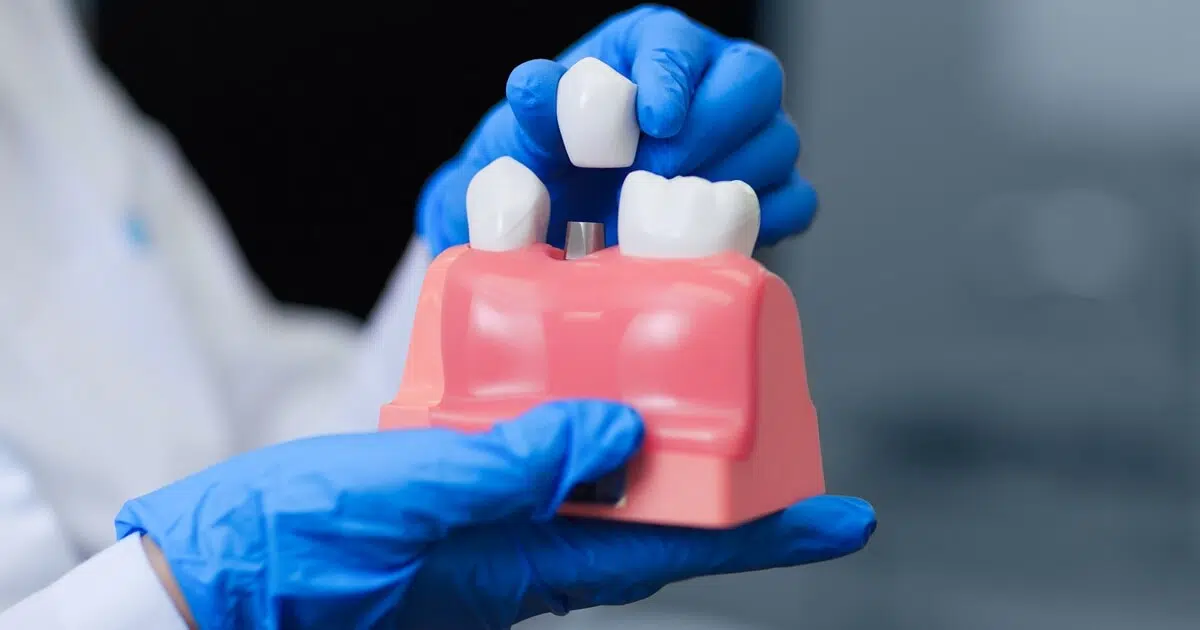
An implant is an artificial root, usually made of titanium, placed into the jaw where the natural root used to be. On top of it sits a crown, matched to the shape and shade of the surrounding teeth so the replacement settles naturally into the smile. Because the implant stands on its own, the teeth either side are left untouched — there is no need to grind them down to carry the new tooth, as a bridge requires.
The titanium root does something a denture or bridge cannot. It fuses with the bone over a few months — a process called osseointegration — and once it has, it gives the bone something to work against again, helping preserve the shape of the jaw that tooth loss would otherwise let recede.
What it asks of you
An implant is not a fit for every mouth, and the conditions matter. To receive one, you need enough bone to anchor it and healthy gums to surround it. You also need a genuine commitment to keeping it clean — daily brushing and flossing, and regular check-ups — because the long-term success of an implant rests as much on care as on placement. Where the bone is thin, it can sometimes be built up first; where healing is likely to be unreliable, an alternative may serve better. An assessment is what tells you which case you are.
The systems we use
At Orchard Scotts Dental we place Straumann implants, a Swiss system with a long clinical record across many countries. Two features are worth understanding rather than simply listing. Straumann’s surface technology is designed to encourage faster, more predictable integration with the bone, which can shorten healing times. Its Roxolid material allows for slimmer implants without sacrificing strength, which in some cases reduces the need for bone grafting. Straumann also makes a ceramic implant in a natural ivory colour — a metal-free option suited to patients with thin or receding gums who would rather avoid any metal showing through.
Placement itself is guided by 3D imaging, which lets the implant be positioned precisely and at the correct angle. The technology is in service of the biology — a well-placed implant integrates and lasts; a poorly angled one does not.
How it compares with a denture
A denture and an implant solve the same problem in different ways, and the differences are worth understanding rather than ranking. A denture rests on the gum and is removable; an implant is fixed in the bone and cared for like a natural tooth. Because the implant is anchored, it does not shift when you eat or speak, and it does not rely on clasps or hooks that can press on the remaining teeth. It also does not decay. The trade-off is the surgery and the healing time a denture does not involve. For someone who wants a fixed, long-lasting replacement and has the bone to support it, an implant tends to be the more natural fit; for others, a denture remains an entirely reasonable answer.
Why tooth replacement matters in later life
Tooth loss becomes more common with age, and in Singapore it is not rare among older adults. It is not only a cosmetic concern — losing teeth can affect how comfortably a person eats, speaks, and maintains nutrition, and incremental loss, one tooth at a time, can quietly cause more trouble than it first appears, as neighbouring teeth drift and opposing teeth over-erupt into the gap. Replacing a missing tooth promptly, whether with an implant or an alternative, helps prevent the more involved rehabilitation that drifting can later require. The point is not to alarm, but to make the case for addressing a gap sooner rather than letting it settle.
How we think about it
A replacement tooth has to satisfy three things at once: it has to stay healthy in the bone, function comfortably under a real bite, and belong in the smile rather than stand out. Biology, function and aesthetics — those considerations decide whether an implant is the right route for you, or whether an alternative would serve you better, and they are why the recommendation follows the assessment rather than the other way round.
If this resonates
If you are weighing how to replace a missing tooth and want a straight read on whether an implant is the right tool, the place to begin is a proper look at your bite, your bone and your goals. You can read more on our dental implants page, and arrange a consultation when it suits. We will tell you plainly what we see, and what we would and would not recommend.