A missing tooth is easy to underestimate. It looks like a cosmetic matter, and sometimes it is mostly that. But a gap rarely stays a single problem. It changes how comfortably you chew, sometimes how clearly you speak, and — over a longer horizon — what happens to the bone that used to hold the tooth in place. An implant is one way of addressing all of those at once. It is worth understanding what it actually does, and where the limits of that lie.
What an implant is
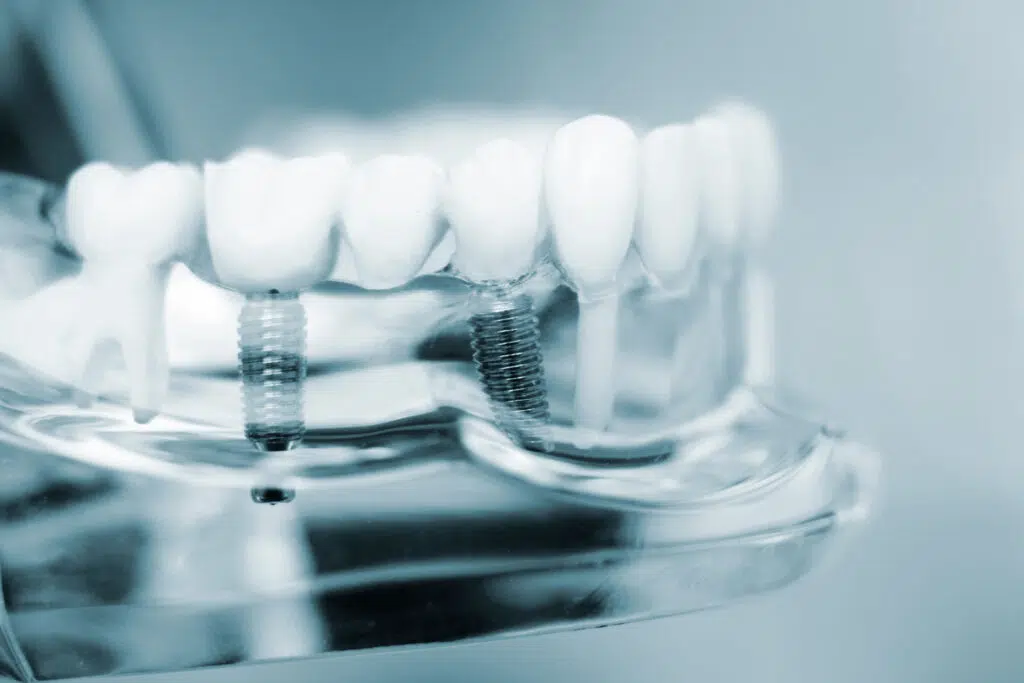
An implant is an artificial tooth root, usually titanium or ceramic, placed into the jaw by minor surgery. On top of it sits a crown, matched to the teeth around it. The distinction that matters is anchorage: because the post is fixed into the bone rather than resting on the gum, the replacement behaves more like a natural tooth than a removable denture does. That single difference is behind most of what follows.
Eating without managing it
The most immediate change people notice is at the table. A denture can shift or click while you eat; a gap simply makes some foods awkward. Because an implant is anchored, it lets you chew across a more normal range of food without organising meals around the appliance. That is not a small thing — comfortable chewing is the front end of good digestion, and a diet you do not have to edit around your teeth is easier to keep varied and nourishing.
Speaking and self-consciousness
Front teeth shape sounds, and a missing one can blur certain words or invite a lisp. A stable replacement tends to settle speech back to normal. There is also the quieter dimension: many people with a visible gap learn to guard their smile in the rooms where they would rather not. A replacement that looks like it belongs lets that guard down. We are careful not to overstate this — confidence is personal, and a tooth does not manufacture it — but removing a reason to hold back is a real and human benefit.
The benefit you cannot see
The most consequential thing an implant does happens beneath the gum, out of sight.
When a tooth is lost, the bone that anchored it begins to recede, because the stimulation it relied on has gone. An implant placed into that bone gives it something to work against again, which helps preserve the surrounding bone and the structure it supports. This is the part of the case that rarely features in conversation, because it is invisible and slow — but over years it is often what matters most. A denture or bridge restores the surface; an implant also tends to the foundation.
Living with one
Day to day, an implant asks little that is unfamiliar. It is brushed and flossed like a natural tooth, reviewed at regular check-ups, and kept free of the plaque that can inflame the gum around it. There are no adhesives and no overnight soaking. With that ordinary care, implants are designed to last for many years, and often a great deal longer — though longevity is earned by maintenance rather than promised by the hardware.
What the surgery involves
Placement is done under local anaesthetic. The gum is opened, the implant set into the prepared bone, and the tissue closed over it, often with a temporary cap to protect the site. Then comes the part that asks for patience: over the following months the implant fuses with the bone — osseointegration — which is what turns it into a stable foundation. In some cases an abutment is fitted in a second, smaller step before the final crown goes on. None of it is dramatic; most of it is waiting for biology to do its work.
An implant restores the surface and tends to the foundation. A gap, left as it is, quietly reshapes both.
How we think about it
A replacement tooth has to satisfy three things at once: it has to stay healthy in the bone, it has to function comfortably under a real bite, and it has to belong in the smile rather than stand out. Biology, function, and aesthetics — those are the considerations that decide whether an implant is the right route for a particular person, or whether a simpler solution would serve them just as well. The point is never the implant for its own sake. It is matching the treatment honestly to the mouth in front of us.
If this resonates
If a missing tooth is affecting how you eat or how you feel, and you want a straight reading of whether an implant suits your case, that begins with a proper look at your bite, your bone, and your goals. You can read more on our dental implants page, and arrange a consultation when it suits. We will tell you plainly what we see, and what we would and would not recommend.