When a tooth is lost, the choice between an implant and a bridge is usually framed as a contest — which one wins. That is the wrong frame. They are two sound ways of solving the same problem, each with its own logic, and the better question is not which is superior but which set of trade-offs fits your priorities, your mouth and your timeline.
What each one is
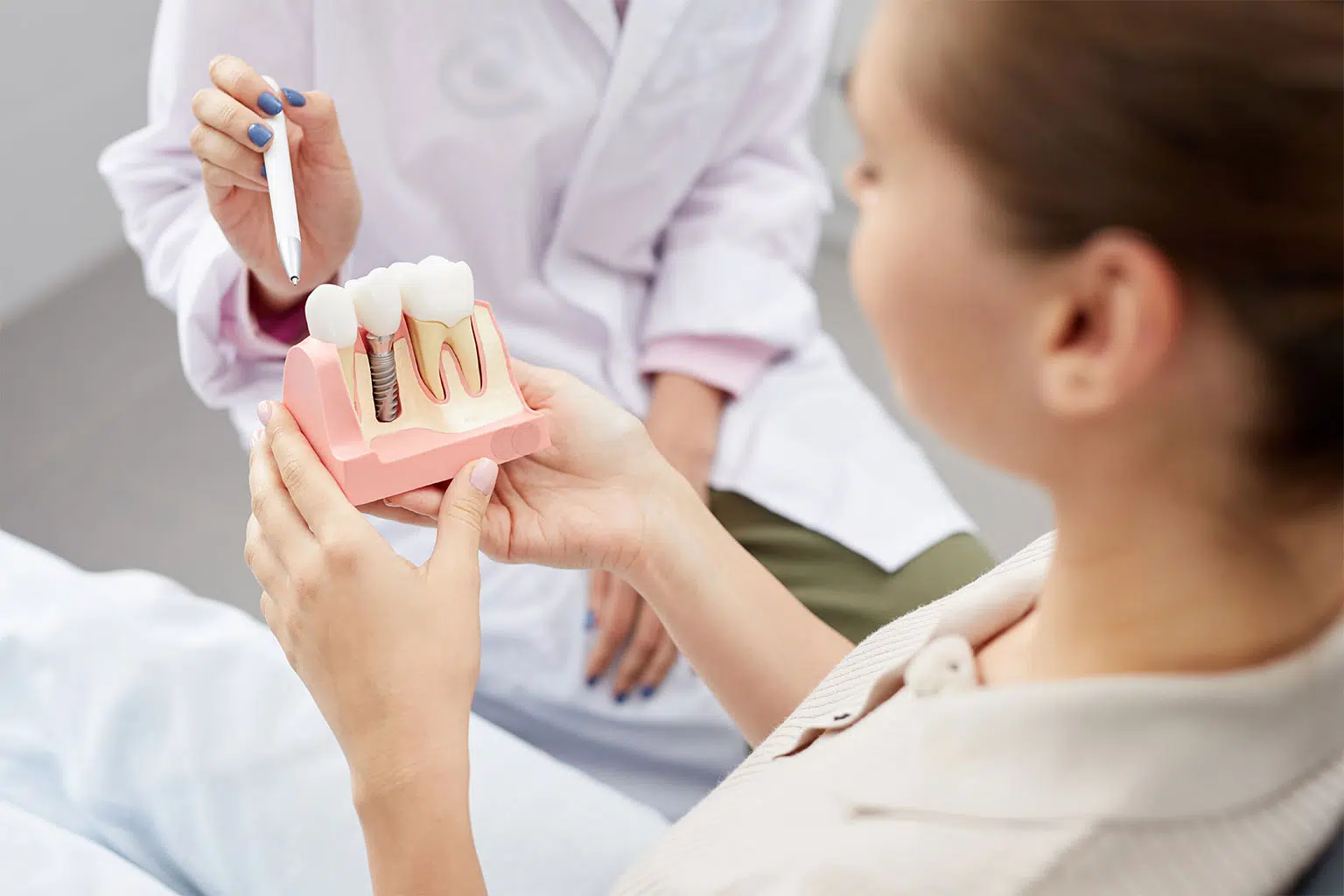
A dental implant is an artificial root placed surgically into the jaw. Once it has fused with the bone, it supports a crown that stands on its own, independent of the neighbouring teeth. It restores the tooth from the root up.
A bridge takes a different approach. It spans the gap with an artificial tooth held in place by crowns on the teeth either side. Those neighbouring teeth — the abutments — are reshaped to carry the bridge. It is a non-surgical solution that rests on the structure already there rather than replacing the root beneath the gap.
Where the trade-offs lie
The two diverge on a handful of points, and each point is a genuine trade-off rather than a verdict.
The neighbouring teeth. A bridge requires reshaping the healthy teeth on each side to anchor it. An implant leaves them untouched. If the adjacent teeth are pristine, many people are reluctant to file them down; if those teeth already need crowns for other reasons, a bridge can put that work to double use.
Time. A bridge can often be completed within a few weeks and without surgery. An implant asks for more patience — after placement, the bone needs some months to fuse around it before the final crown goes on. One is quicker to a finished result; the other takes longer by design, because the fusing is the mechanism that makes it stable.
The bone underneath. This is the quieter distinction, and often the most consequential. When a tooth is lost, the bone that held it begins to recede, because the stimulation it relied on has gone. An implant placed into that bone gives it something to work against again, helping preserve the shape of the jaw over time. A bridge sits above the gap and does not interact with the bone in the same way. If long-term bone preservation matters to you, that points one direction.
Day-to-day care. A bridge needs particular cleaning under the artificial tooth — a floss threader or similar — to keep plaque from reaching the supporting teeth. An implant is brushed and flossed like a natural tooth and does not decay, though the gum around it still needs proper care.
Longevity. Both can last well. A well-maintained bridge serves many years; an implant, looked after, can last longer still. The honest point is that maintenance and the conditions of your mouth shape the lifespan as much as the choice of appliance does.
Implants and bridges are not rivals. They are different answers to the same question, and the right one depends on what you most want to protect.
Who each tends to suit
A bridge often suits someone who would prefer to avoid surgery, has healthy teeth either side of the gap to support it, and wants a fixed result within a shorter timeframe. An implant often suits someone who wants to leave the neighbouring teeth alone, values bone preservation, and is content with a longer process for a replacement that stands on its own. Neither preference is a compromise — it is a matter of what you are optimising for.
Cost differs between the two as well, and it depends entirely on the particulars of your case, including whether any bone needs building up first. That is something to discuss at a consultation rather than read off a list, because the meaningful comparison is not the upfront figure but what each restoration does over the years that follow.
How we think about it
A replacement tooth has to satisfy three things at once: it has to stay healthy in the bone, function comfortably under a real bite, and belong in the smile rather than stand out. Biology, function and aesthetics — those considerations guide which route we would recommend, and they are the reason the recommendation follows the assessment rather than the other way round.
If this resonates
If you are weighing an implant against a bridge and want a straight read on which fits your case, the place to begin is a proper look at your bite, your bone and the teeth around the gap. You can read more on our dental implants page, and arrange a consultation when it suits. We will tell you plainly what we see, and what we would and would not recommend.