When a tooth is missing, an implant is one of the more considered ways to replace it — but it is also a surgical procedure, and a sensible person wants to understand it before agreeing to it. The questions below are the ones patients raise most often in the chair. None of them has a sales answer. The honest reply to most is that it depends on your particular case, which is the whole reason an assessment comes first.
What exactly is a dental implant?
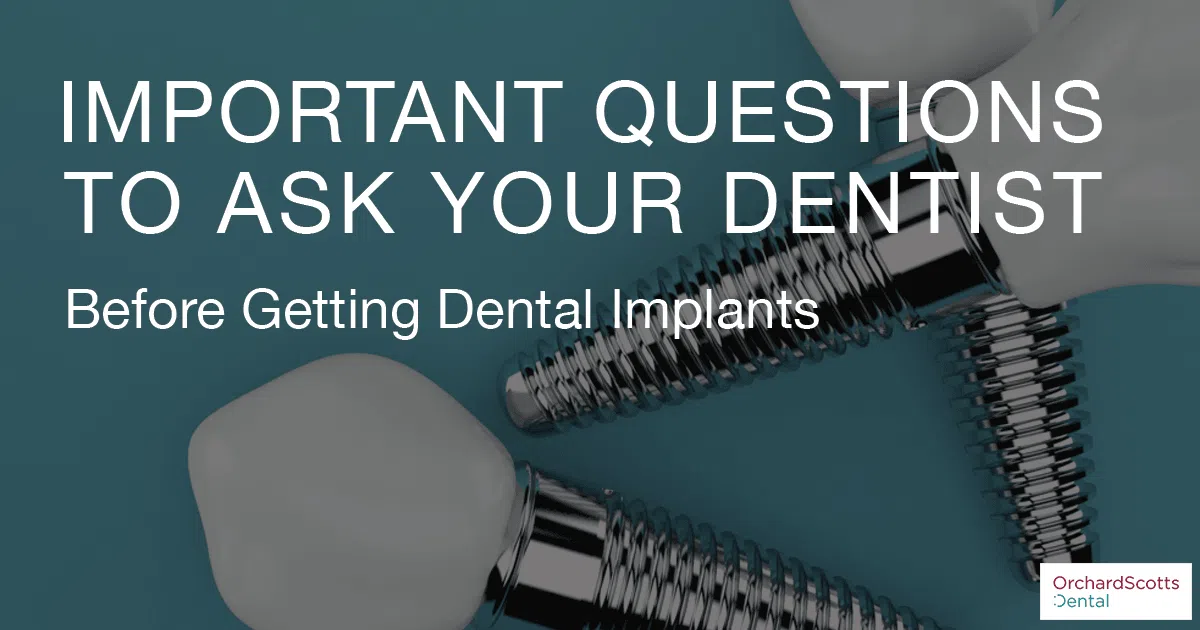
It helps to separate the implant from the tooth you see. The implant itself is a small post — usually titanium, occasionally ceramic — placed into the jaw to act as an artificial root. A crown, shaped and shaded to match the teeth around it, is then built on top. So the implant is the foundation; the crown is the part that does the visible work. That distinction matters, because the strength of an implant comes from how well that buried post integrates with the bone, not from anything you can see in the mirror.
Do I actually need one?
Not necessarily. An implant is a way to replace a missing tooth — whether one tooth or several — but it is not the only one, and it is not always the most proportionate. People choose implants for two reasons: a gap they would rather not see, and the difficulty of chewing comfortably around it. Both are valid. But a bridge or a denture can also serve well in the right circumstances, and part of a good assessment is establishing which solution genuinely fits your mouth, your bone, and your priorities — not defaulting to the most involved option.
Will it look natural?
In skilled hands, an implant restoration is difficult to pick out. Because the post sits below the gum and the crown is custom-made to match the colour, shape, and translucency of the neighbouring teeth, a well-executed implant tends to disappear into the smile rather than announce itself. The quality of that result depends heavily on the planning and the ceramic work behind it — which is why the experience of the team matters more than the brand on the box.
How long does an implant last?
This is where honesty serves the reader better than a headline figure. Implants are designed to last for decades, and with good care many remain stable for the better part of a lifetime. But longevity is not guaranteed by the implant — it is earned by maintenance. The post integrates with the bone; the crown and the gum around it need the same daily cleaning and regular review as a natural tooth. People who look after their implants tend to keep them a very long time. People who neglect the gum around them risk losing them early. The fixture is durable; the outcome is a partnership.
Does it hurt?
The procedure itself is done under local anaesthetic, so it is not painful at the time. Afterwards there is usually some soreness for a few days, which most people manage with ordinary over-the-counter pain relief. If the case calls for building up bone first — a graft — the recovery can ask a little more of you, and your dentist will prepare you for that in advance rather than letting it surprise you.
How long does the surgery take?
Placement is quicker than people expect — often well under an hour for a single implant, longer where several are involved. The longer part of the journey is not the surgery but the healing that follows, the months during which the implant fuses with the bone before the final crown is fitted. That waiting is not delay for its own sake; it is the mechanism by which the implant becomes stable. A clear timeline is something you should expect at the planning stage.
Is it safe, and is it right for me?
Implant surgery is well established and, for someone healthy enough to undergo a minor procedure, carries a small and manageable risk. The more useful question is suitability rather than safety. Healing conditions (uncontrolled diabetes among them), significant bone loss, or smoking can all bear on whether an implant settles well. Establishing this honestly, before anything is decided, is precisely what a thorough evaluation is for.
Does it matter where I have it done?
It matters a great deal — not as a marketing line, but mechanically. An implant is a small, precise piece of surgery followed by careful restorative work, and the result depends on the training behind both. The sensible questions to ask any clinic are about experience, the implant systems they work with, and how they handle complications if one arises. The right answer is the team that can plan your case properly and stand behind it — not the cheapest quote, and not the most expensive.
If this resonates
If you are weighing up a missing tooth and want a straight reading of whether an implant suits your case, that begins with a proper look at your bite, your bone, and your goals. You can read more on our dental implants page, and arrange a consultation when it suits. We will tell you plainly what we see, and what we would and would not recommend.