
Most articles about dental implants are quietly trying to sell you one. This one is not. Implants are a genuinely good answer to a missing tooth in the right circumstances — and a poor fit in others. The honest account is the more useful one, because the question is rarely whether implants work. It is whether they are the right tool for your particular case.
What implants do well
The case for an implant rests on two things, one obvious and one less so.
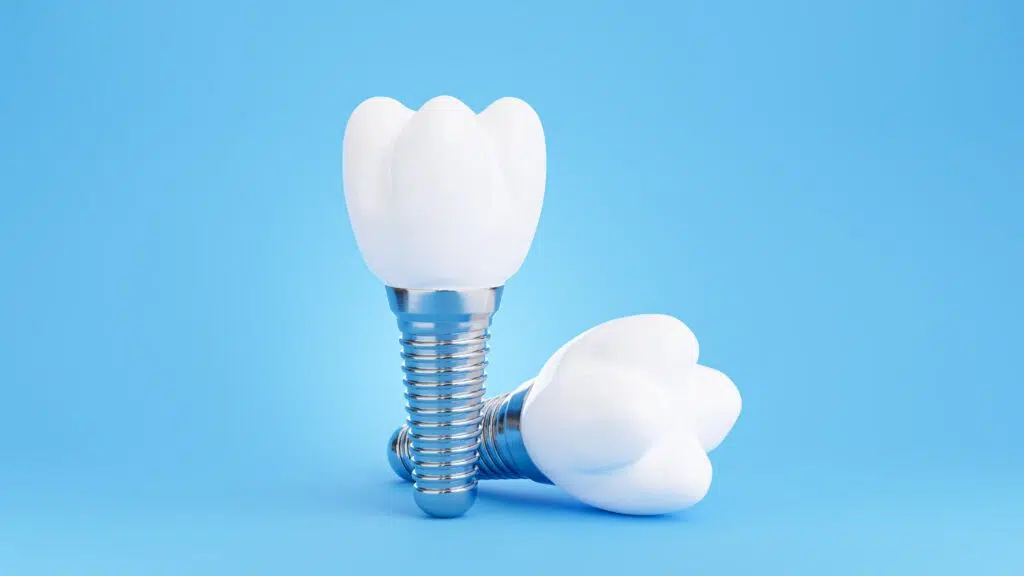
The obvious one is function. An implant is an artificial root fixed into the jaw, with a crown built on top. Because it is anchored rather than resting on the gum, it does not shift when you eat or speak. That stability is the main thing that separates it from a removable denture — it restores chewing and lets you eat across a normal range of food without managing the appliance around your meals. The crown is also matched to the surrounding teeth in shape and shade, so the replacement sits naturally in the smile.
The less obvious benefit is what happens beneath the gum. When a tooth is lost, the bone that used to hold it begins to recede, because the stimulation it relied on has gone. An implant placed into that bone gives it something to work against again, which helps preserve the surrounding bone and, with it, the shape of the jaw and face over time. That preservation is the part you cannot see, and often the part that matters most in the long run.
Day to day, an implant is also straightforward to live with. It is cared for like a natural tooth — brushing, flossing, regular check-ups — with no adhesives or overnight soaking.
The honest considerations
Set against that, there are real factors to weigh, and they are not footnotes.
Placing an implant is minor surgery. It involves an incision in the gum and preparing the bone to receive the implant. For anyone anxious about dental procedures, that is a meaningful consideration, and like any surgery it carries a small risk of complications such as infection — risks that a thorough assessment and an experienced hand are there to manage.
Then there is time. After placement, the implant has to fuse with the bone — osseointegration — and that takes some months. It is not an inconvenience so much as the mechanism by which the implant becomes stable, but it does mean the full result is not immediate, and it asks for patience and a few follow-up visits along the way.
Implants are also not suitable for everyone. Conditions that affect healing (uncontrolled diabetes among them), significant bone loss, or smoking can all bear on whether an implant is likely to settle well. This is precisely the kind of thing a careful evaluation exists to surface before anything is decided.
And there is cost. An implant generally costs more upfront than a denture or bridge, and where the bone needs building up first, that adds to it. The figure depends entirely on the particulars of your case, which is why it is something to discuss at a consultation rather than read off a list — the right comparison is not the sticker price but what the restoration does over the years that follow.
Who they suit — and who they do not
Implants tend to suit someone who has lost one or more teeth, has reasonably healthy gums and enough bone to anchor the implant, and wants a fixed, long-lasting replacement rather than a removable one. They are a less natural fit where the bone or general health makes healing uncertain, or where a simpler, less involved solution would serve the same purpose well. Neither answer is a failure — it is the treatment matched to the person.
How we think about it
A replacement tooth has to satisfy three things at once: it has to stay healthy in the bone, it has to function comfortably under a real bite, and it has to belong in the smile rather than stand out. Biology, function, and aesthetics — those are the considerations that decide whether an implant is the right route for you, or whether one of the alternatives to tooth implants would serve you better. If an implant is the right route, our note on what happens during the procedure walks through the steps.
If this resonates
If you are weighing up a missing tooth and want a straight assessment — whether an implant is the right tool, or whether it is not — the place to begin is a proper look at your bite, your bone, and your goals. You can read more on our dental implants page, and arrange a consultation when it suits. We will tell you plainly what we see, and what we would and would not recommend.